Melbourne’s gone full uggo
Thinking about how the rags have taken hold.

Remember the vibe shift discourse of 2021? What a fantastically humbling experience for millennials that was. Officially stripped of our power to make youth culture, all we could do was look on in fear as the horde of 2000s babies strutted towards us in low-slung jeans, their arched, pencil-thin eyebrows threatening imminent judgement.
This is what it felt like whenever I talked to anyone on the right side of 28, anyway. People were nervous, baffled. Why was their 21-year-old sister making bank selling jorts on Depop? Potential irrelevance haunted our every move.
Now that we’re almost halfway through the decade, the panic has thankfully subsided. Life went on. More millennial-friendly trends like quiet luxury, office siren, clean girl and whatever snoozy thing Matilda Djerf is peddling came to distract us.
But what I find most interesting about our current post vibe-shift times is the explosion of ragcore. Distressed denim and handkerchief-meets-jellyfish-tentacle hems have wormed their way into Melbourne’s independent fashion scene, and it’s been fun watching more established labels decide whether or not they want to participate.
I use ragcore as an umbrella term to describe a post-apocalyptic look, broadly characterised by a DIY spirit, asymmetry, threadbare finishes, and the colours of dirt, flesh and gunmetal. At various points, I’ve also called this look ‘op-shop Eckhaus Latta’ or ‘Berlin club-kid grunge’. My friend Tara Kenny wrote a great piece about the origins of the aesthetic in Melbourne for The Age in 2022, which heralded other apt descriptors such as “trash chic renaissance”, “elf punk” and “Rainbow Serpent circa 2010”. None of these terms are searchable on TikTok, a fact I enjoy immensely, though for posterity, I have to note that New York trend forecaster Mandy Lee christened one version of this look 'avant apocalypse' in 2021 (her video went on to spawn trend pieces across the web). Mandy describes avant apocalypse as “an evolution of the subversive basics trend… a Rick Owens and Margiela love child… characterised by neutral maximalism, lots of deconstructed pieces, asymmetry and wearing clothes the wrong way.” But when I say ragcore, I’m talking about a look that has a particular Melbourne flavour, separate from what’s on international runways.
My educated guess is that ragcore has been percolating in this city for at least a decade. Between 2014–17, I was working in a call centre staffed by queer art freaks and students — to whom this style truly belongs — and had front-row access to some truly beguiling outfits. Technically, it was the ugliest stuff you could imagine back then: customised/torn secondhand t-shirts; ill-fitting 2000s sandblasted denim; old cargo pants; Ed Hardy-type caps. (I know, this is what half of Brunswick wears now.)
As Tara’s article in The Age mentions, ragcore can be traced back to 2010s VCA and RMIT students, as well as to artist Matthew Linde’s Centre for Style (RIP). The Melbourne retail space brought together artists and designers who wanted to exist outside what they saw as a destructive fashion industry. Could clothing be a means of artistic exploration instead of just commerciality? How can you subvert fast fashion and modern modes of production? These were the questions being asked at CfS, and ‘brands’ such as Rare Candy responded by making one-off pieces with artist friends, fucking with ‘good taste’ in the process.
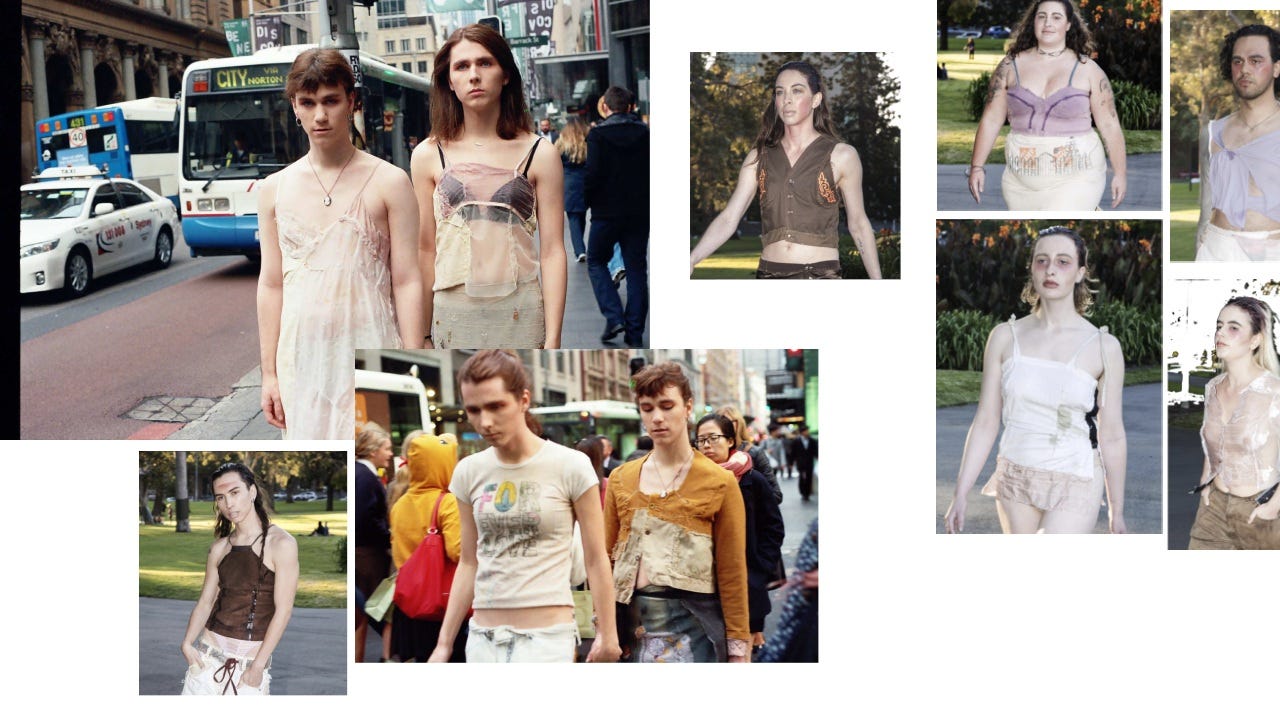
A 2016 Rare Candy shoot in Editorial Magazine, photographed by Jack Mannix and styled by Rowan Oliver; pictures from Rare Candy’s 2015 performance at Carlton Gardens
I always think about the 2015 Rare Candy show in Carlton Gardens. I am not part of art circles and so did not see this presentation in person, but I did view it on social media afterwards. I found the show challenging, but also touching. You can see the proto-ragcore elements there: the messy piecing together of disparate materials, upcycled fabrics, imperfection by way of intentional stains, graffiti/scrawl instead of print and an overall wonkiness that represents the home/handmade ethos. There was something heartfelt and tender about those garments — each one seemed to suggest the vulnerability of the wearer in the way it hugged or exposed parts of the body.
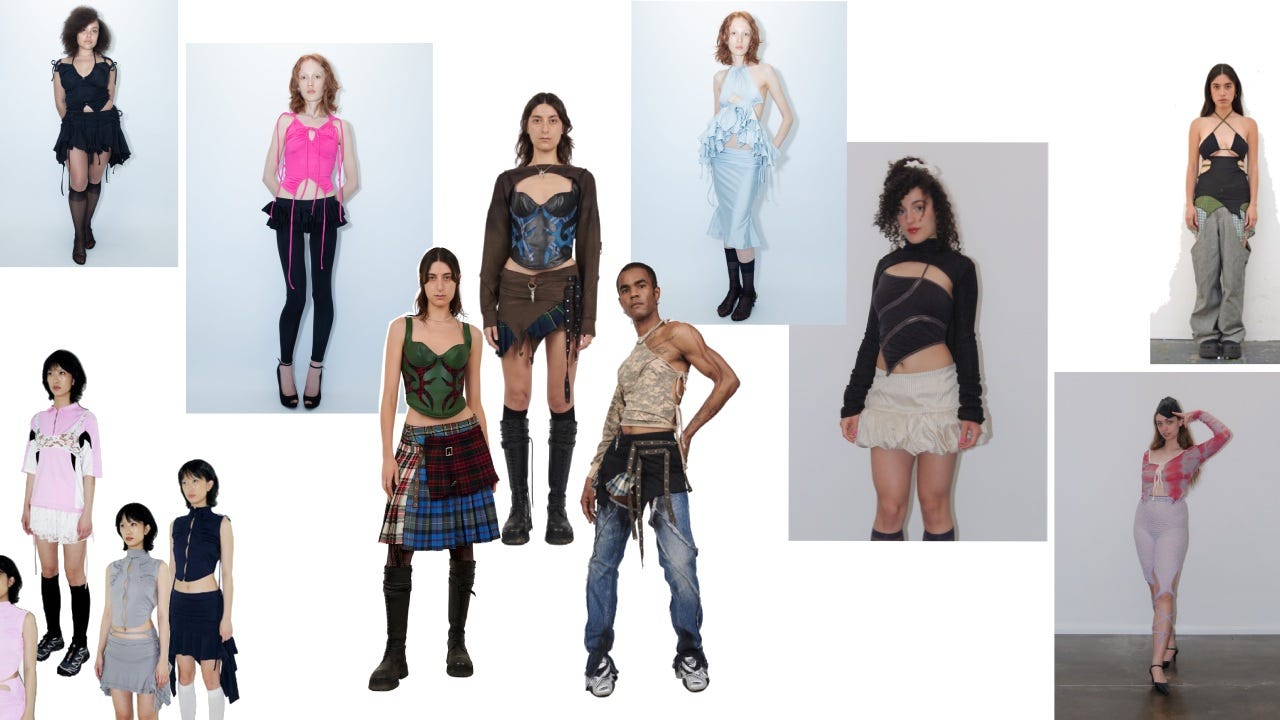
Bottom left: Toile Studios; top left: Emily Watson; centre: Hydra Opia; right: Maroske Peech; top right: Sschafer
Ragcore as we know it today really kicked off a few years after CfS shut down. Leaders of the genre now include Karla Laidlaw (founded in 2019), Emily Watson (2019), Ramp Tramp Tramp Stamp (2018) and Maroske Peech (2017). (Sidenote: I feel like Maroske Peech is doing less ragcore, more theatrical, costume-inspired looks now — shall we call it clowncore?) These labels started out making experimental one-offs and have since grown and refined their visions to create more consistent collections, though they still eschew traditional fashion cycles. Melbourne boutiques Error404store and Sucker also fly the flag for ragcore, stocking both the aforementioned brands and a host of new, emerging names made in their likeness.
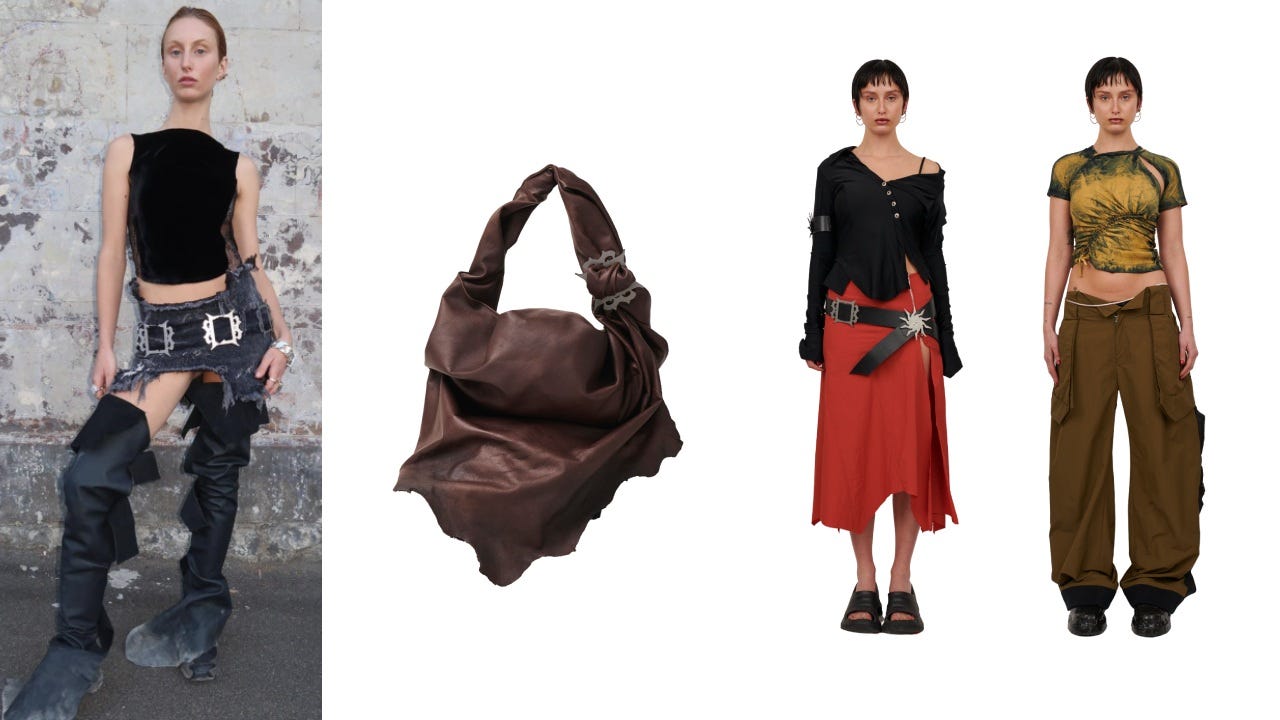
Karla Laidlaw’s designs and the weapon-like buckles in question
The ragcore we’re seeing now is overall less crafty, a little more goth-sleek and more tailored to a fashion girl, which is why you can find Melbourne-born brands like Emily Watson and Raga Malak on SSENSE. Emily Watson is particularly influential — her colourful version of ragcore lends itself to Paris Hilton-style McBling and FRUiTS kawaii, both of which are popular at the moment. It’s different from the hard-edged vision of Karla Laidlaw, SSCHAFER and Hydra Opia, brands whose clothes feel like armour. (According to a friend who bought one of Laidlaw’s leather handbags, the designer’s signature metal buckle is so sharp, it could double as a ninja star.) Of course, these are clothes made for wearing in clubs and at raves, not a Mad Max battleground, but they are united in their ability to make the wearer look unapproachable, unfuckwithable. You know what they say, ugliness keeps the normies away!
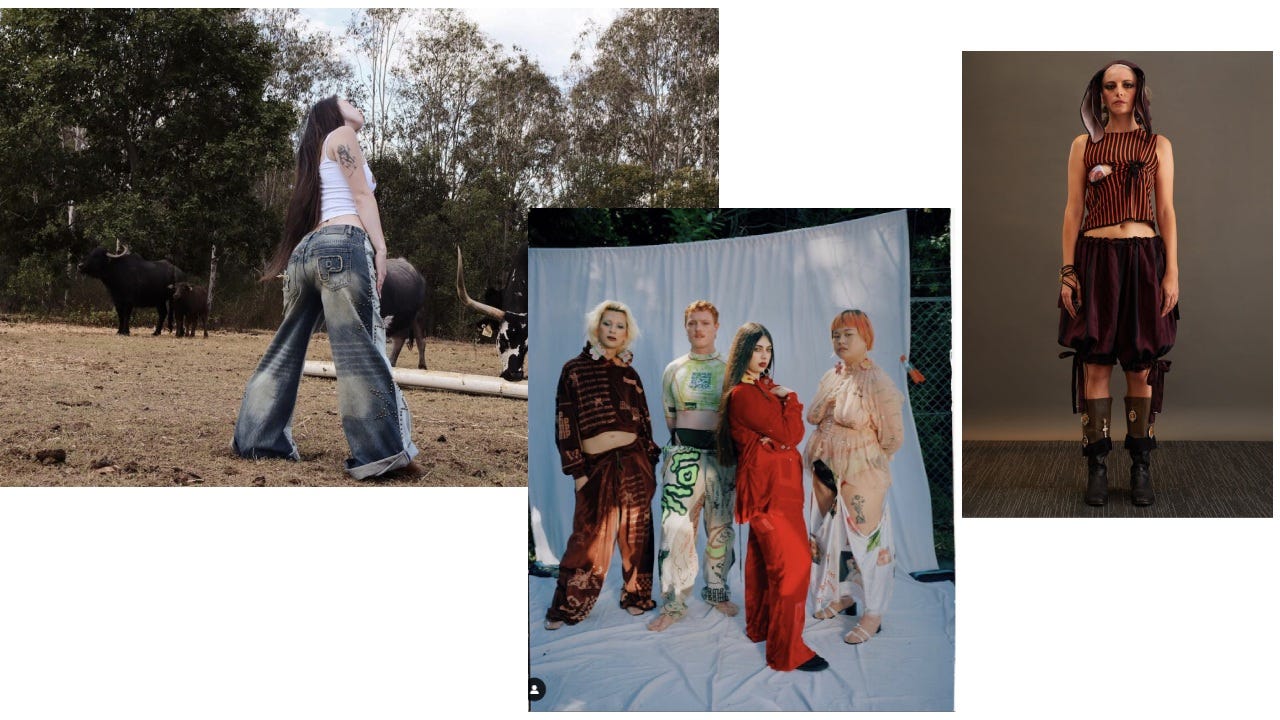
From left: Purgatory; Ramp Tramp Tramp Stamp from 2019; Ramp Tramp Tramp Stamp today
I didn’t really think ragcore would leave the confines of Miscellania, but something about it appeals specifically to gen Z who are increasingly one-upping each other in search of more outrageous, extreme pieces to stand out from their fast-fashion-clad peers. Combine this with the subcultural signifiers inherent to ragcore, plus the overall rise of 2000s aesthetics and you have a broader audience for this look than you might expect.
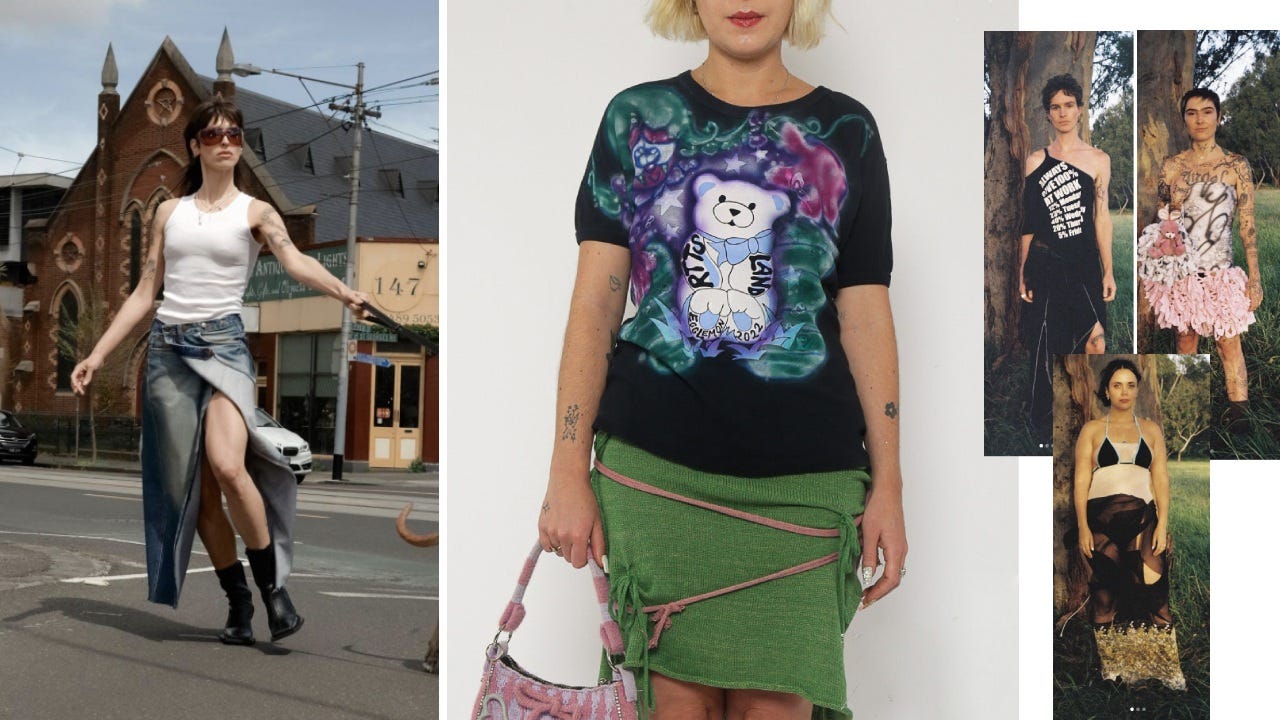
Some examples of upcycling, from left: KAHE skirt made from old jeans; RTTS X EGG LEMON X MIMI LIBRO X ELLA BORG tee, a four-way collaboration made from “preloved t-shirts donated by the ABC”; Egg Lemon’s one-of-a-kind pieces. Ramp Tramp Tramp Stamp and Egg Lemon are from Sydney but fit right into Melbourne ragcore
So does the DIY subversiveness of 2015’s proto-ragcore live on today? Kind of. Most of the labels mentioned here are indeed micro in scale and output — usually just a designer making a small run of clothing in-house or with the help of individual local makers. The designs themselves, and the way they are presented, to me, are subversive, but the fabrics less so. The clothes are made from a mix of new and deadstock materials (the eco credentials of the latter are perhaps overstated), but an entirely upcycled collection is less common to see. At the end of the day, these labels are small businesses within the fashion ecosystem, not art practitioners working on the margins. As my smart friend Amy pointed out, ragcore is now a fully fledged aesthetic, “produced to look undone and DIY”. What these brands do prove is that graduate fashion designers can find success doing their own thing in Australia, without having to first ‘make it’ in a fashion capital overseas.
Anyway, unless you’re a fashion person who spends an inordinate amount of time thinking about this, you probably don’t care. You’ve just noticed hanky-hem skirts floating around town and want to know more. Which brings me to my next point: ragcore is filtering down through the tiers of fashion, presumably in a bid to attract gen Z. Demand for this stuff is high enough that you can find more palatable versions at varying price points, so let’s take a look at some examples below.
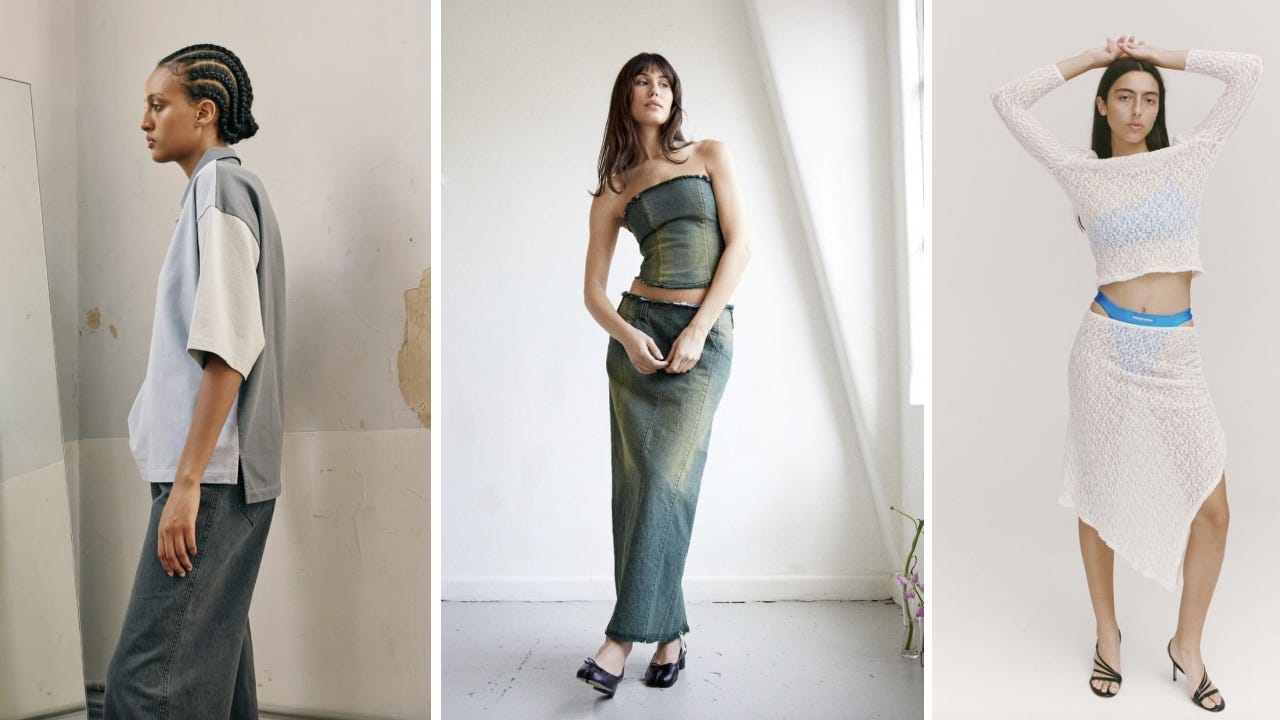
Some recent looks from Permanent Vacation
Oats the Label makes several versions of this raggedy tie top, styled here with jeans for a cute-sexy look.
Permanent Vacation — a label popular with my millennial friends — has steadily been injecting more ragcore fug into the mix, while also dialling down its pretty ginghams and easy summer dresses. Discoloured, distressed denim and overlocked seams usher in a new vibe.
Alpha60 is dipping its toes in via some low-key distressing, raised seams and acid-wash effects. Nothing too crazy, just a few pieces to slot between the usual corporate/arty workwear.
Next we have a personality-devoid loincloth from the ever-depressing Princess Polly.
Teen-friendly Cotton On and Glassons have created ‘avant-basic’-ragcore hybrids for the price of dinner.
The queen of skinny jeans herself, Bettina Liano, has been reworking ragcore for Chapel Street.
I mention Bye Bambi only because it seems to have an insane online reach, but something feels a bit Fashion Nova about its Barbiefied rag proposition.
Honourable mentions:
You cannot deny the influence of Kiko Kostadinov’s womenswear designers Laura and Deanna Fanning — Londoners since their university days but Melburnians by birth. I’m not going to call their work full ragcore, but I’d deem it part of the universe. I love their skewed knitwear and how their designs look like clever reworkings of op-shop garb.
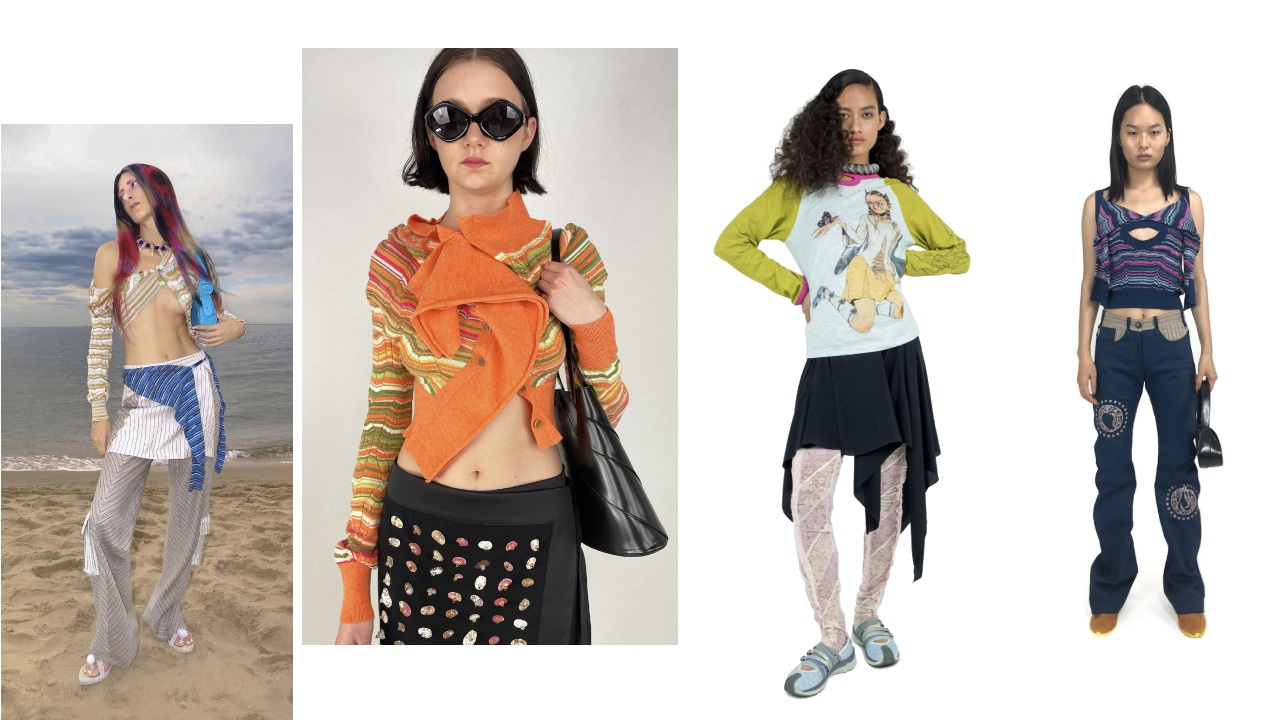
Kiko Kostadinov SS22 shot in Melbourne with a local creative team; another look from SS22; Heaven x Kiko Kostadinov t-shirt; more SS22
Shout out to Spanish fashion label Paloma Wool, worth mentioning for its dedicated following in Melbourne. The brand changed direction in 2021 and hasn’t looked back. No more sun-drenched 70s vibes, easy linen tops or soft colours. The silhouette is now bodycon, with lots more clingy mesh and a dark club-kid energy to accompany.
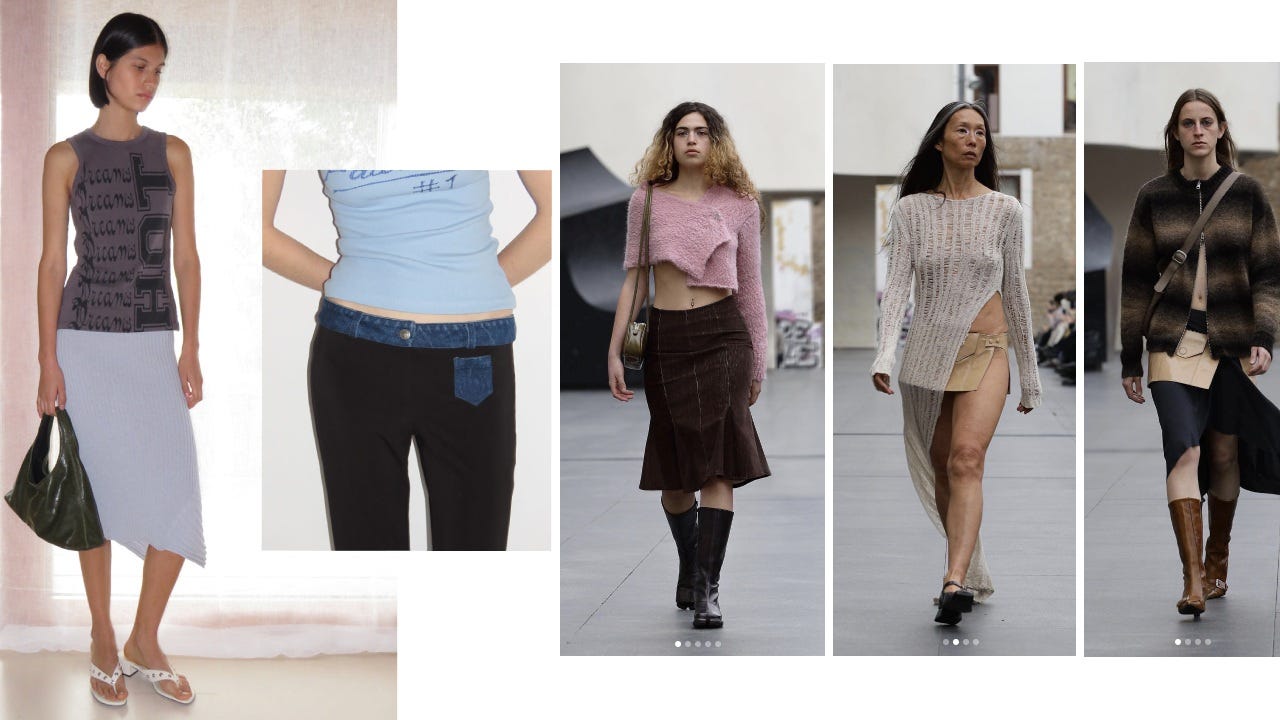
There’s a heavy dose of irony in today’s Paloma Wool. The brand has seemingly scrubbed evidence of its softer archive from the internet
Final mention goes to the Vietnamese labels that have been making glam ragcore for at least five years now. I see you! Evidently, as do the K-pop celebrities.
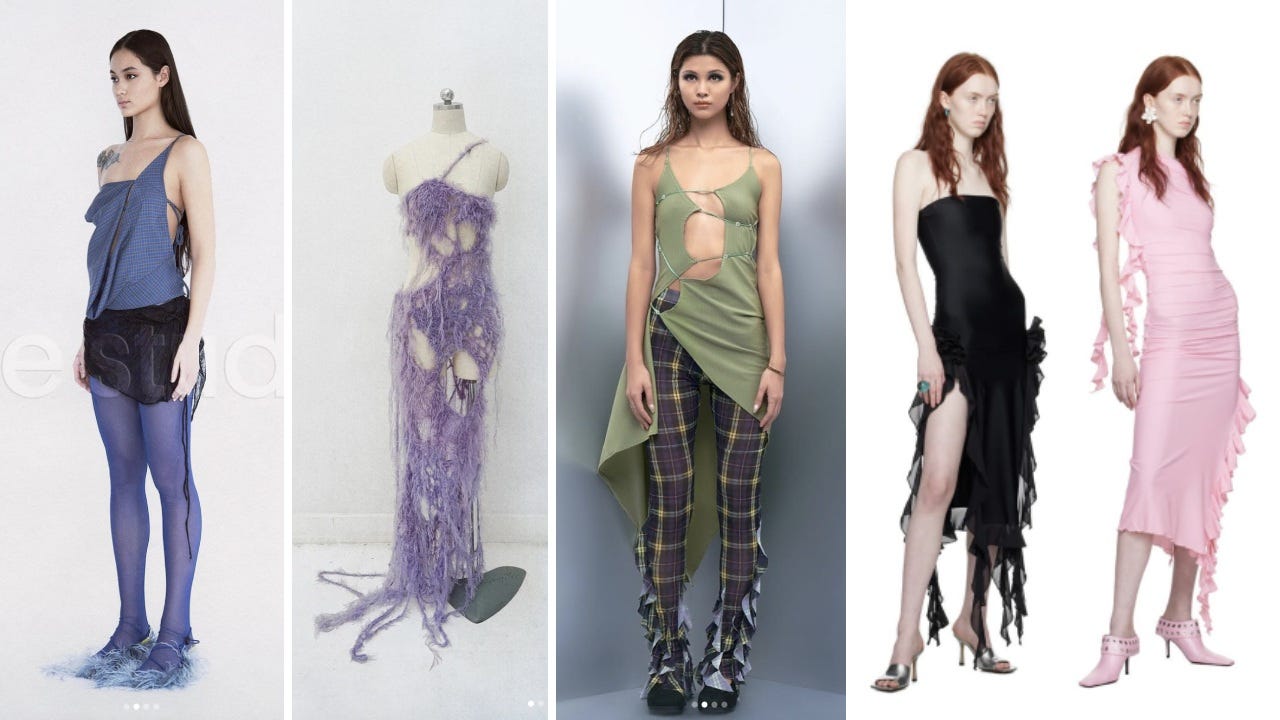
1–3: Aeie Studios; 4–5: Fanci Club
Well, that concludes my wee TED Talk, prompted by Melbourne friends who keep asking me what the hell happened to all the independent labels in this city. Alas, us olds with full-time office jobs and no desire to look like an SSENSE meme indeed have fewer locally made options these days. With that said, I like the underlying message ragcore brings to the table: just wear your old stuff; care less about acceptability and what flatters; anything goes.
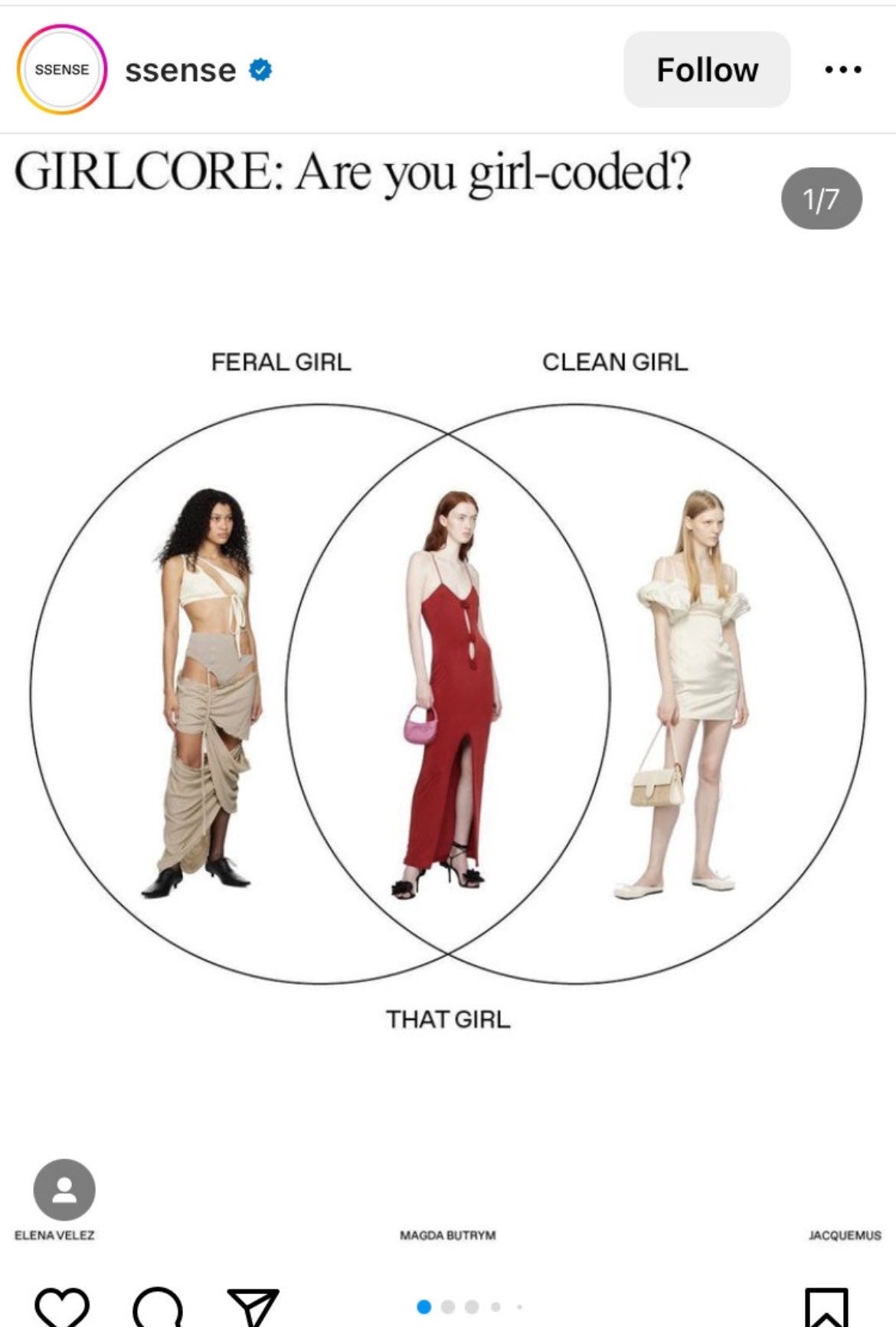
“us olds with full-time office jobs and no desire to look like an SSENSE meme indeed have fewer locally made options these days” SO REAL
i also rly miss paloma wool’s old aesthetic lol i do not have the gumption to pull off threadbare bodycon on the daily
I think this article ignores (perhaps intentionally) the reality of clothing production in the current decade. It’s easy to lament that there isn’t the prevalence of independent labels that there was 20 years ago but perhaps the lens should be focused on the fact that clothing manufacturing has been almost entirely driven to exploitative overseas models. Exacerbated by international conglomerates whose business model is to stamp out independent competition. What has been umbrella termed ‘ragcore’ in this piece is perhaps more a rejection of the ethics of fast fashion and an attempt to reclaim not only the design of garments but their production too.